Change and Disruption: Fight It or Embrace It?
Make Real Change From The Ground up
With the advent of Industry 4.0 – the growth of automation and technological drivers that impact how we conduct business – how are we to deal with the rapid pace of change we currently face?
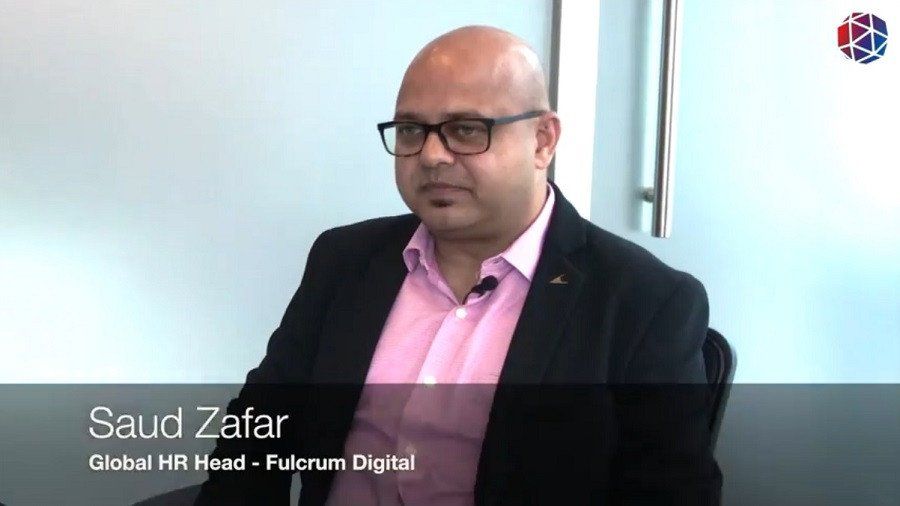
That was the question put by Leaderonomics India CEO, Parthiban Vijayaraghavan, to Saud Zafar, who is the global head of HR (human resources) at Fulcrum Digital – a leading management consultancy and ICT (information and communications technology) firm.
Saud has enjoyed an illustrious career spanning 20 years within the HR space, delivering strong leadership within the IT (information technology), ITES (information technology enabled services), and market research sectors. And yet, Saud began as a software engineer to trade, transitioning into HR after developing his passion for understanding and working with people.
As he discussed the merits and challenges of change and disruption, Saud talked about his own career shift and how he overcame initial obstacles. He said:
It took me nine months to move from the technical domain to the HR domain. It’s all about your learning, your passion, your purpose in life. If you’re clear about these things, you’ll figure out a way to achieve (your goals).
Be prepared for change
In Saud’s view, dealing with change boils down to how much understanding we have about the nature of that change and to be prepared for what might come. In today’s business landscape – often referred to as a ‘VUCA world’ (volatile, uncertain, complex, ambiguous) – the most effective leaders are those who are prepared for and enjoy the challenge of whatever change might bring.

When it comes to organisations being prepared for the rapid speed of change brought about by Industry 4.0 and beyond, Saud believes that companies have to be willing to invest in bringing in the right people at the right time.
Making real change
In order for businesses to flourish, he says that talents need to possess qualities that include creativity, emotional intelligence, and an eager openness to learning not only new skills and practices but also appreciating what has worked previously and to integrate this into their overall capabilities.
Talking about how Fulcrum Digital invests in people, Saud said, “Here, we have a career development plan, which provides structured learning – and integral part of our development. From a skills perspective, we help people to develop creativity, emotional intelligence, innovation, and leadership.”
“When we talk about leadership, we don’t just mean attaining a title or designation; it’s about making a real change from the ground up.”
Adapt to change
When asked about embracing change on an organisational level, Saud agreed that companies should walk the talk and be proactive in adapting with the times and making sure they evolve in line with customer demands and market trends. If they’re not prepared to do this, Saud believes that businesses will find themselves left behind as they lose their edge.
He said, “Every year, we should set a new target, just as every year we set a New Year Resolution. We have to ask:
‘What learnings are we going to embrace this year?’
It could be picking up one domain certification or one technical certification. Whether or not the organisation is supportive to the idea is secondary; if you need to do it, you should do it. From there, it becomes about how you apply what you’ve learned to your day-to-day operations. Because, many times, we go through a certification and we don’t get the opportunity to implement it in our day-to-day lives.”
“So, in that respect, we should force the situation: ‘OK, we’ve got the certification – what next? How do we move it to on-the-job learning?’”
Saud agreed with Parthiban’s sentiment that, no matter the external pace of change, if people are well-trained and open to learning in a manner that improves their agility and capacity for innovation, they will surely be able to manage and adapt to whatever change arises.
Read: Adaptation is the Key to Thriving in Today’s Dynamic Business Environment
Change is a necessity
Saud said, “Change is not an option, it’s a necessity. Gone are those days where we just needed one technical certification or some knowledge and we’ll get ahead. Every year, new versions of change present themselves – just look at smartphones as an example.”
“From an Indian context, we are in an era where we can take change and make a difference. There are several areas that we can work on to improve and we need to do that through our continual learning.”
Developing a laser-like focus on professional development helps us prepare for change, Saud believes that we shouldn’t try to “clutter our minds with different things”.
He added, “Keep it simple. Embrace change with an open heart; if somebody gives you feedback, it’s for your betterment. Apart from that, it’s very important to read something new on a daily basis, whether it’s for 10 or 15 minutes, these things actually make a difference. That’s the message I want to give out to everyone.”


Edited by: Kiran Tuljaram
Business