Siemens Malaysia
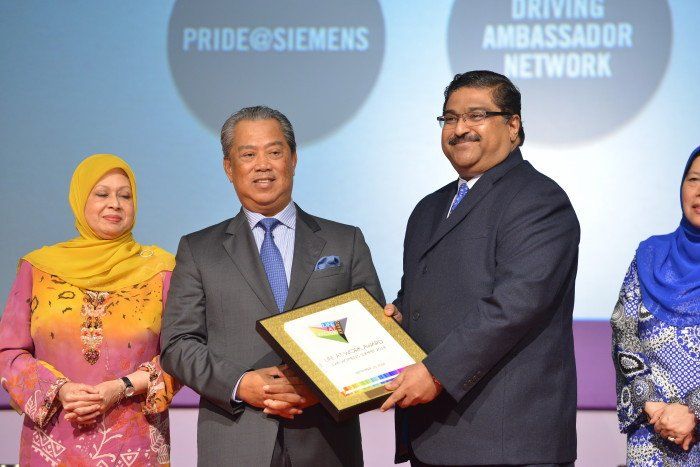
 (Above: Tan Sri Muhyiddin Yassin (left) presenting the award to Prakash Chandran, president and CEO, Siemens Malaysia)
Retaining talent through workplace flexibility
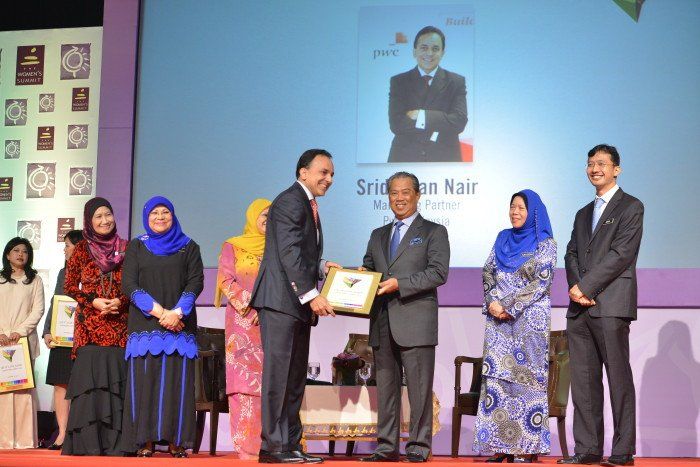
Another organisation that stands proud for breaking conventional work practices is Siemens Malaysia, which walked away with the award for “Making A Difference” category in the Life at Work Award 2014 at the 12th Women’s Summit.
Established in 1972, Siemens Malaysia appreciates the diversity in all employees as this fosters a culture of creativity and innovation, an essence to its business. A total of 40.5% of the employees in Siemens Malaysia are women.
Engaging and retaining talent
In tandem with promoting a sense of work-life balance to enhance engagement and retention of employees, Siemens Malaysia launched a “Work from Home” pilot campaign as part of its PRIDE@Siemens initiative in 2012.
The campaign was introduced after having two-way dialogues with employees and receiving constructive feedback from them.
The “Work from Home” pilot campaign was established to allow employees the choice to work in their preferred setting, which has enabled them to give more focus on their responsibilities and tasks. The policy allowed employees to work from home one day a week.
Another key element was to ensure that employees who worked remotely were equipped with the necessary technology to do their work. That comprises of a laptop, remote access to SharePoint or shared folders, and efficient connectivity.
In terms of connectivity, Siemens Malaysia provided employees with Internet access subsidies which allowed them to claim 50% of their home Internet connectivity packages.
Towards the end of the “Work from Home” pilot campaign, about 60 employees from across the business had participated, and positive feedback was reported by both managers and staff.
There was no drop in productivity or quality of work. There was a healthy rise in engagement as employees could spend more quality time with their families. Even managers were able to handle their teams better.
With all these positive outcomes, the “Work from Home” policy was fully implemented in Siemens Malaysia in 2013.

Today, 13% of the workforce utilises the “Work from Home” benefit. The attrition rate has dropped progressively from 14% in 2011 to 11% in 2012 and to 8% in 2013, far below the industry attrition rate of 16%.
More importantly, Siemens Malaysia believes that it has successfully retained key talent and maintained a positive employee engagement score.
In Malaysia, Siemens launched the “PRIDE@Siemens” programME, with their key initiative – “Work from Home” – to promote employee engagement and improve retention rates.
For more information, please visit www.flexWorkLife.my

Business